

Sustainable Site Planning & Design
Eco-Friendly Site Selection – Ensuring minimal ecological disturbance while integrating green spaces and biodiversity.
Urban Heat Island Reduction – Using reflective surfaces, vegetation, and water bodies to mitigate temperature rise.
Green Infrastructure Integration – Implementing green roofs, vertical gardens, and permeable pavements to enhance environmental sustainability.
Sustainable Construction Management
Low-Impact Construction Techniques – Reducing emissions and waste by using prefabrication and modular construction.
Sustainable Site Management – Implementing best practices to protect natural features and ecosystems during construction.
Construction Waste Reduction – Encouraging recycling, material reuse, and waste diversion strategies to minimize landfill impact.
Energy Optimization & Net-Zero Building Design
Passive Design Strategies – Natural ventilation, thermal mass, and daylighting to reduce energy demand.
Renewable Energy Integration – Solar PV, wind turbines, and geothermal energy for on-site power generation.
Smart Energy Management Systems – AI-driven HVAC, lighting, and building automation to optimize efficiency.
Building Energy Modeling (BEM) – Advanced simulations to improve energy performance and achieve net-zero carbon status.
Occupant Comfort & Indoor Environmental Quality
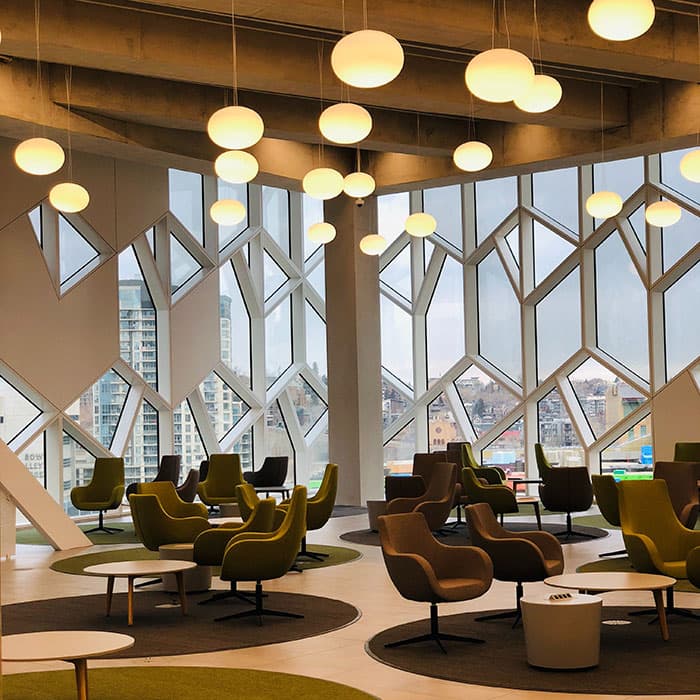
Thermal, Visual, and Acoustic Comfort – Advanced insulation, noise control, and optimized daylighting for a healthier indoor environment.
Indoor Air Quality Monitoring – Smart air filtration and CO2 monitoring to ensure safe and breathable spaces.
Biophilic Design – Integrating natural elements into the built environment to enhance well-being and productivity.
Water Management & Conservation
Rainwater Harvesting & Wastewater Recycling – Reducing municipal water reliance and ensuring sustainable water reuse.
Water-Efficient Fixtures & Smart Irrigation – Implementing sensor-based technologies to optimize water usage.
Permeable Pavements & Stormwater Management – Reducing runoff and enhancing groundwater recharge.
Solid Waste & Circular Economy Integration
On-Site Waste Management & Recycling – Encouraging segregation, composting, and resource recovery.
Adaptive Reuse & Material Upcycling – Extending the lifespan of building materials through sustainable retrofitting.
Life Cycle Assessment (LCA) – Analyzing the environmental impact of materials from production to disposal.
Sustainable Building Materials & Green Certification
Low-Carbon & Recycled Materials – Using hempcrete, CLT, recycled steel, and eco-friendly composites.
Carbon-Neutral Construction Strategies – Ensuring material sourcing and construction practices align with global sustainability goals.
Green Certifications (GRIHA, IGBC, LEED, WELL) – Assisting projects in achieving sustainability benchmarks.
Life Cycle Costing & Performance Monitoring
Long-Term Operational Cost Analysis – Assessing financial and environmental sustainability over a building’s lifecycle.
Smart Metering & Predictive Maintenance – Real-time monitoring for energy, water, and resource optimization.
Performance Tracking & Optimization – Using AI-driven insights to ensure buildings maintain peak efficiency.
Socio-Economic & Community-Centric Strategies
Universal Accessibility & Inclusive Design – Ensuring spaces are adaptable for all users, including differently-abled individuals.
Worker Welfare & Green Jobs Promotion – Advocating for fair labor practices and sustainable employment opportunities.
Environmental Awareness & User Engagement – Educating occupants on sustainability practices for long-term impact.
Innovation & Advanced Sustainability Solutions
Smart Cities & Net-Zero Urban Planning – Designing sustainable urban environments with integrated energy and resource management.
Next-Gen Building Technologies – Implementing AI, IoT, and blockchain for advanced sustainability tracking.
Innovative Construction Methods – Exploring 3D printing, self-healing materials, and carbon capture solutions.